


Professor Odera’s Seven-Year Wait for College Inspired Him to Start His First Youth Organization
Odera grew up in Kenya, the fifth of seven children. "I spent most of my youth in Kenya growing up in a low-income family, but also growing up in a low-income neighborhood," he says. In his neighborhood, finishing high school was hard and getting to University was harder.
"It took me seven years to get to college because I finished high school, but then my parents could not afford college," he says.
Many of the young people around him, including relatives and peers from the slums, never made it to college. He lost three cousins who were all his own age-mates. "Those seven years were quite eye-opening," he says. "But also, I guess, a little traumatic." He came to see "that this is a real problem. It's not theoretical."
Before he left Kenya, Odera served as a youth leader, and many of the young people he worked with saw his departure as a door that might open for them too. He knew he couldn't solve every young person's problem, so he started asking what he could do.
In his first year of college, he owned a personal computer for the first time. "I was 24, and I was realizing my friends have never seen a personal computer or have any knowledge or resources," he says.
That same year, he started his first organization, Vijana Katika Maendeleo (Youth in Development). He raised money, sent resources home, and typed up what he read about poverty so his friends could study it too. "Even one email to a friend was precious," he says. "Even typing notes and sending an email was like gold."
How Odera’s Research on Poverty in Kenya Inspired a Fellowship for Young Leaders
Odera studied political science and economics in the United States, then earned his Ph.D. in political science at the University of Florida. His doctoral research took him back to Kenya. He studied why most poor Kenyans who run small businesses fail within about three years. Those businesses are the main source of income for most Africans.
"From my research studies, I realized it's truly a complex issue that even young people themselves don't know how complex it is," he says.
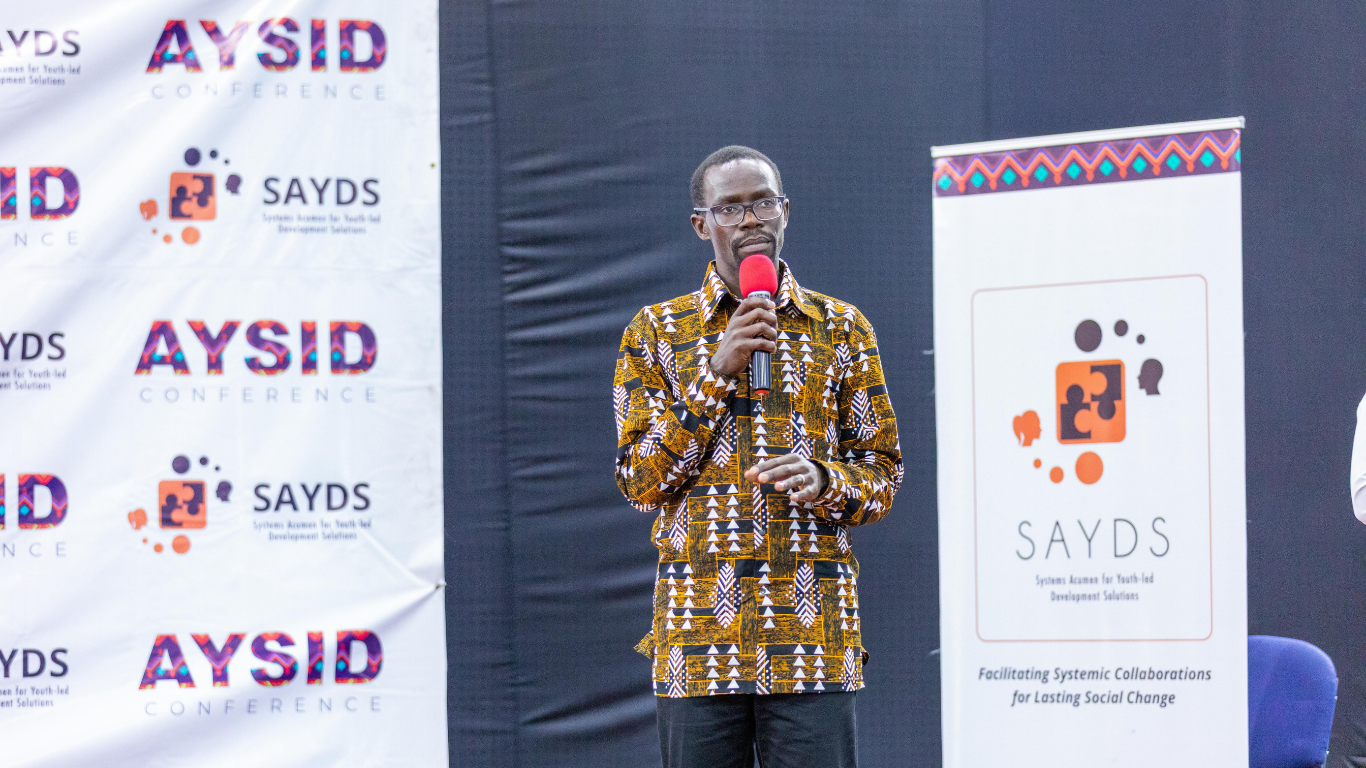
That finding left him with a new question: "How do you sort of equip the young people with the mindset, the skills, and the capacity to navigate those complexities?" Around 2013, he began building SAYDS, short for Systems Acumen for Youth-led Development Solutions, to answer it.
Odera points to the numbers. Africa has one of the largest youth populations in the world, and in some countries young people make up about 65% of the population. They are inheriting poverty and other social problems, and they will fill the teaching, leadership, and community roles of the future. Many don't finish high school or go to college.
"If we have a future where we still have all these problems, but also you have young people who are not acquiring the skill sets that they need to solve those problems, then these problems are just going to be persistent," he says.
SAYDS takes on a second problem too. Governments and community development projects leave young people out of the rooms where those problems get worked on. "With about 60% or more population of youth, we can't afford to marginalize youth and exclude them and have youth who are disengaged in these issues," Odera says.
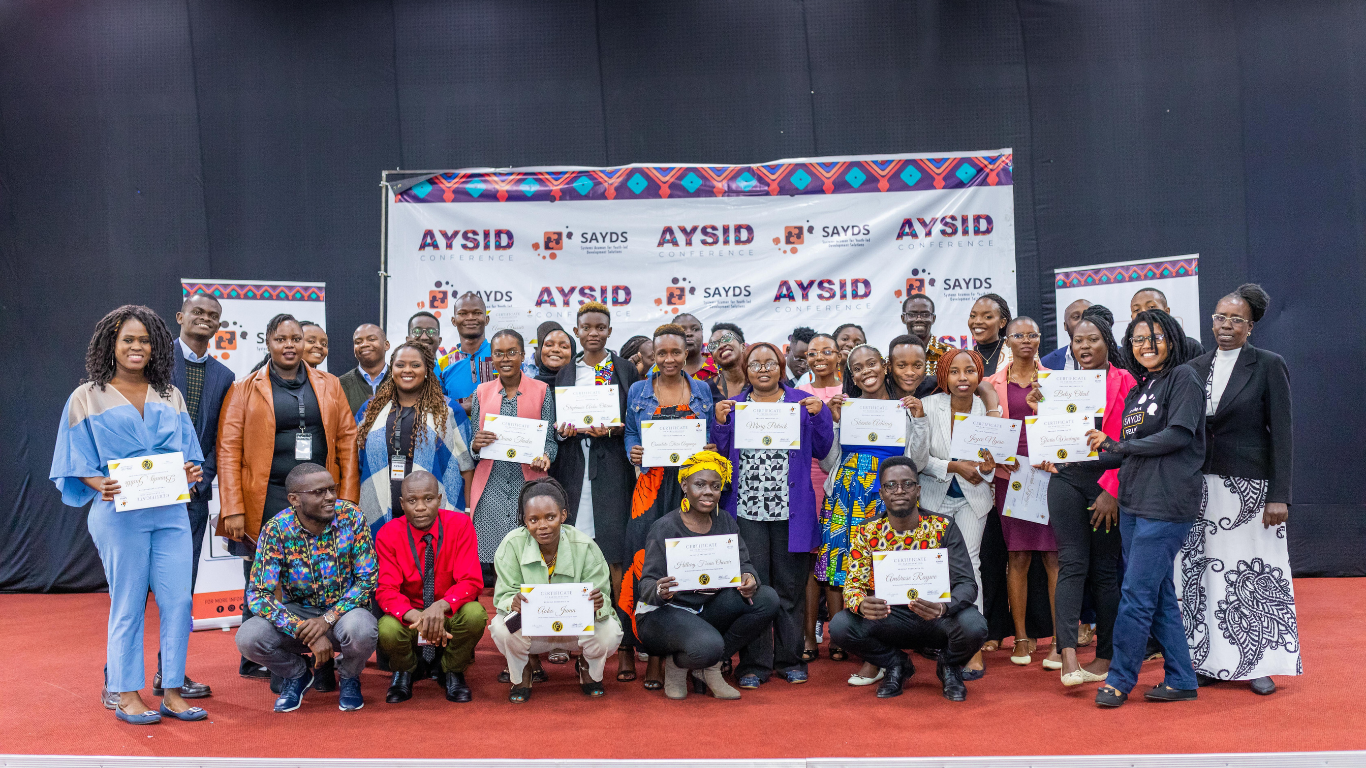
He describes the SAYDS mission as tackling "youth marginalization, exclusion, and disengagement in addressing complex social problems, especially in development work and policy." Through its fellowship, SAYDS trains young people from across Kenya in the systems thinking skills they need to tackle those problems in their communities.
At the University of Florida, Odera trained to become a research professor. He was running his nonprofit at the same time, and some of his advisors thought he should spend those hours preparing for that career instead.
"As a PhD student, I was also very aware that I didn't have the luxury of putting aside the problems that Africans were facing or Kenyans were facing," he says. "That burden was too heavy for me not to do something about."
After graduating, he had to decide between applying for research faculty jobs and running SAYDS. He chose SAYDS. "I just could not shake off that I need to do something about youth and poverty," he says.
He wanted to keep teaching, though, and he set a rule for himself. "If I ever go or work in a university, it has to be a university that does not ask me to give up the work that I'm doing," he says. "It has to be a university that has the values that align with the way I think of scholarship. Scholarship and practice have to go together."
He had read about Minerva in The Atlantic while at UF. As an instructor there, he had built his classes around active learning and the science of learning, making them "very interactive, very seminar-based." Minerva's focus on practical knowledge and its global mission matched that approach. Its virtual model also suited his family, which moved a lot while his wife pursued her own Ph.D.
He made prioritizing his family very clear in his job interview for Minerva. "I thought if I mentioned this in my interview and they don't like it, then it can't be the place I work," he says. "But it was widely welcomed and supported."
How Professor Odera Helps Minerva Students and SAYDS Fellows Share What They Know Across Borders
In his Minerva classes, Odera puts students at the center. "We don't lecture at students," he says. "We believe students are capable of coming to class and bringing knowledge to class and working together to co-create knowledge."
He also draws on the places his students come from. "I remind them that they are experts by virtue of the fact that they grew up somewhere different, and that they bring something of value to the table that I cannot bring," he says.
In a class the day before this interview, his students spent the session critiquing each other's work "without me talking and saying much."
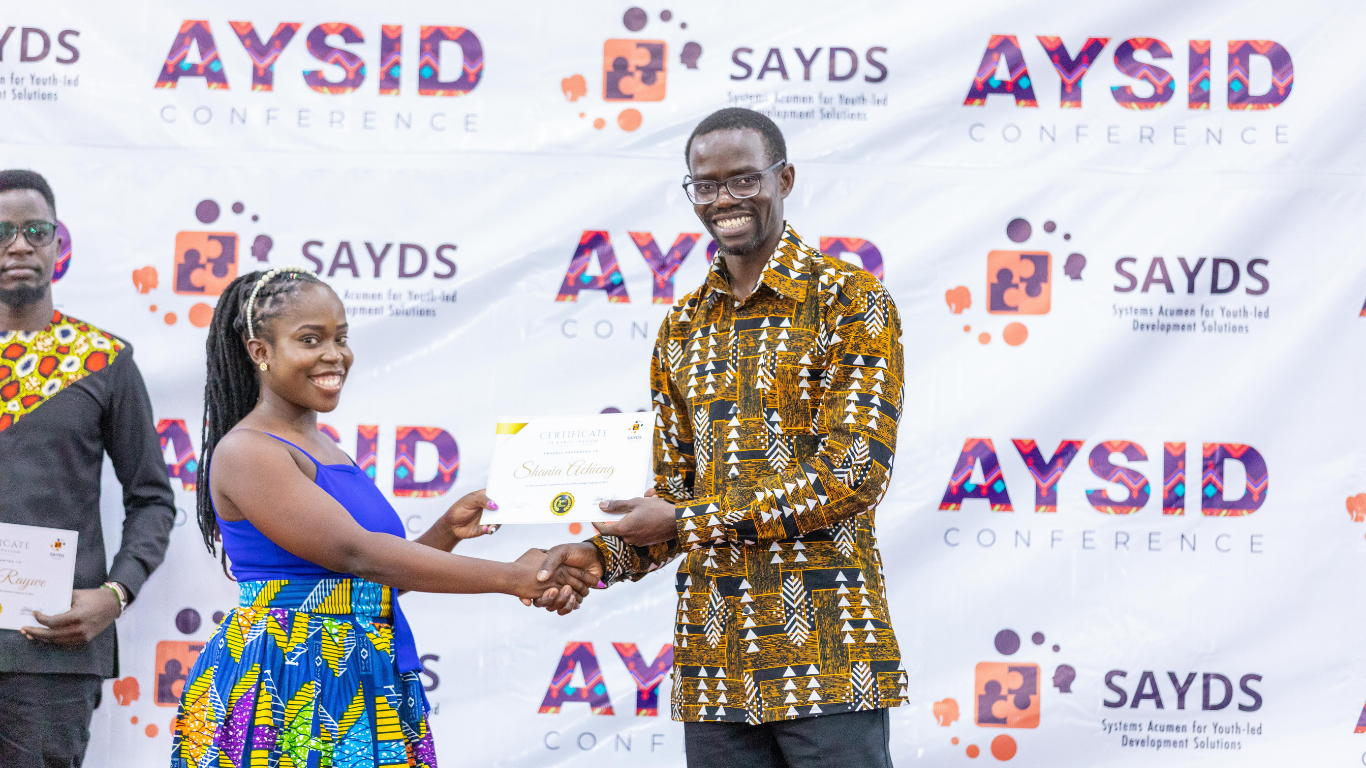
Odera brings the same idea to SAYDS. In one virtual exchange, SAYDS fellows shared their experience of Kenya's education system with University of Florida students taking a comparative education policy course. The fellows came in as the experts.
"Knowing that you can add value to someone" matters at a personal level, Odera says. "You see yourself in a different way and you see your power in a different way."
After exchanges like that, Odera sees fellows find a new sense of purpose and motivation. They also find hope. "For young people, sometimes it's not that you can tell them that they will get a job from doing it, but that feeling that there is some hope there in the sense that you're connected beyond your context and that you can bring something of value to someone beyond your country," he says.
Odera remembers what leaving Kenya meant to the young people around him. "Leaving your country to go study abroad is huge," he says.
Many fellows can't travel abroad, but through the exchanges, they get a version of that experience. "In some sense they have left, right?" he says. "They are collaborating with students abroad and learning from professors abroad and taking courses abroad."
Odera also teaches fellows to see themselves as global citizens, with systems thinking skills they can bring to problems in the United States. He reminds them that "international development work can go the other way too." Fellows teach American students how to approach development through systems thinking, and "they love that a lot," he says.
A journey that continues
Asked what has kept him committed to SAYDS for more than a decade, Odera keeps his answer short: "Improving and sustaining youth well-being." He extends that to the families and communities around young people, "especially low-income families in Africa."
His motive hasn't changed since he started SAYDS, and it shapes his teaching too. "I think even what I do in Minerva is about youth well-being," he says.
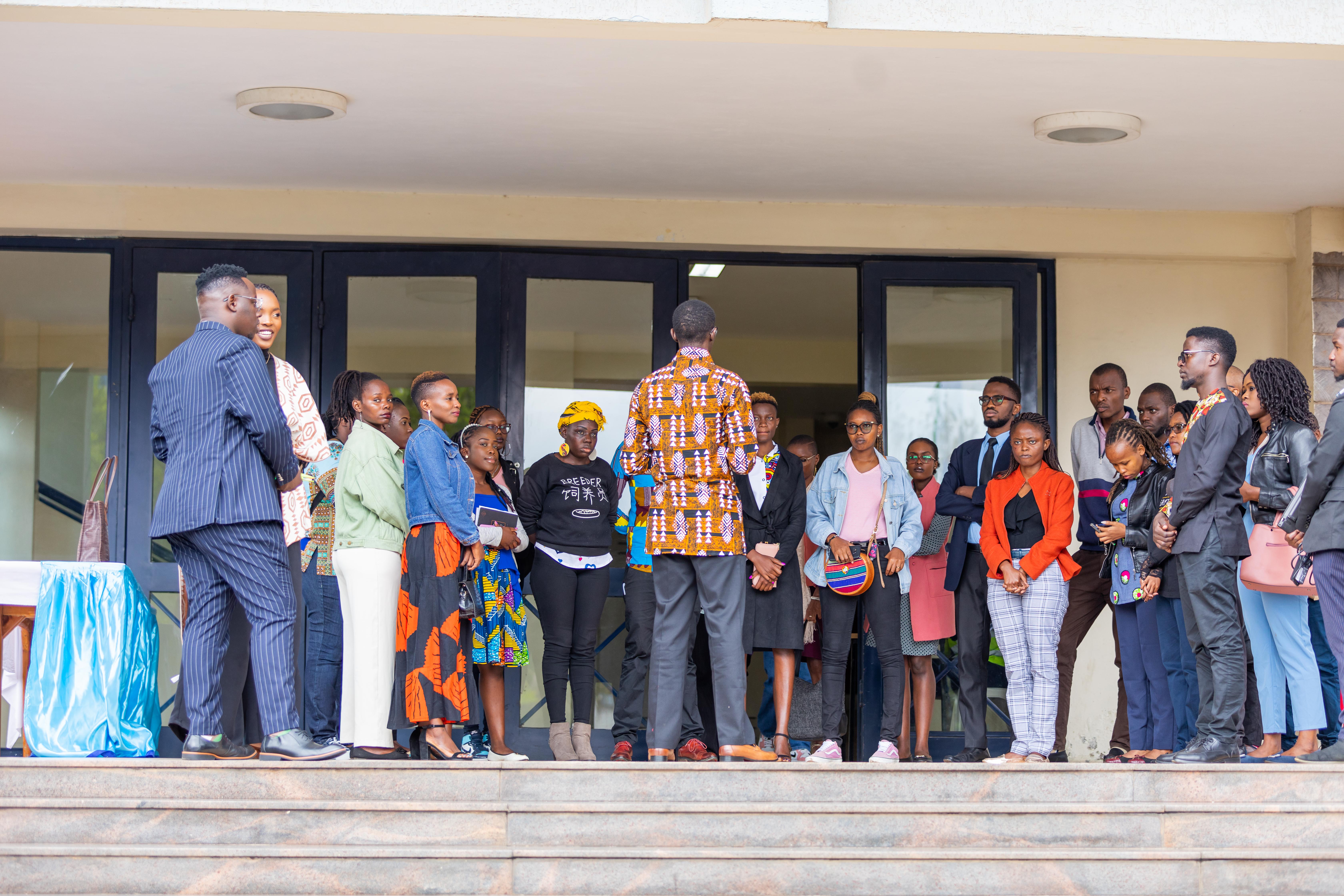
Odera has also brought SAYDS into Minerva, integrating its work into the Minerva Policy Lab. "It's a long journey and it still continues," he says. "This journey can sometimes be discouraging when you feel like you want to give up and not continue."
"On those days, someone reaches out. A Minerva dean asks whether SAYDS can collaborate with students in the lab, or someone asks to share the SAYDS story."
"I get that motivation again, and I realize, oh, there is still something important here we are doing," he says.
--
Professor Odera is one of many faculty who bring real-world practice into the Minerva classroom. Interested in learning more? Explore Minerva here.
Quick Facts
Computational Sciences
Computational Sciences
Natural Sciences
Computational Sciences
Arts & Humanities, Natural Sciences
Social Sciences & Arts and Humanities
Business
Computational Sciences
Computational Sciences
Social Sciences & Business
Computational Sciences
Social Sciences
Computational Sciences & Business
Business & Computational Sciences
Computational Sciences
Computational Sciences
Social Sciences & Business
Business
Natural Sciences
Social Sciences
Social Sciences
Social Sciences & Business
Business & Computational Sciences
Business and Social Sciences
Social Sciences and Business
Computational Sciences & Social Sciences
Computer Science & Arts and Humanities
Business and Computational Sciences
Business and Social Sciences
Natural Sciences
Arts and Humanities
Business, Social Sciences
Business & Arts and Humanities
Computational Sciences
Natural Sciences, Computer Science
Computational Sciences
Arts & Humanities
Computational Sciences, Social Sciences
Computational Sciences
Computational Sciences
Natural Sciences, Social Sciences
Social Sciences, Natural Sciences
Data Science, Statistics
Computational Sciences
Business
Computational Sciences, Data Science
Social Sciences
Natural Sciences
Business, Natural Sciences
Business, Social Sciences
Computational Sciences
Arts & Humanities, Social Sciences
Social Sciences
Computational Sciences, Natural Sciences
Natural Sciences
Computational Sciences, Social Sciences
Business, Social Sciences
Computational Sciences
Natural Sciences, Social Sciences
Social Sciences
Arts & Humanities, Social Sciences
Arts & Humanities, Social Science
Social Sciences, Business
Arts & Humanities
Computational Sciences, Social Science
Natural Sciences, Computer Science
Computational Science, Statistic Natural Sciences
Business & Social Sciences
Sustainability
Sustainability
Natural Sciences & Sustainability
Natural Sciences
Sustainability
Computational Sciences
Computational Sciences
Computational Science & Business
Data Science and Statistics
Data Science and Statistics, Digital Practices
Earth and Environmental Systems
Cognition, Brain, and Behavior & Philosophy, Ethics, and the Law
Computational Theory and Analysis
Computer Science and Artificial Intelligence
Brand Management & Computer Science and Artificial Intelligence
Computer Science and Artificial Intelligence
Economics and Society & Strategic Finance
Enterprise Management
Economics and Society
Cells and Organisms & Brain, Cognition, and Behavior
Cognitive Science and Economics & Political Science
Applied Problem Solving & Computer Science and Artificial Intelligence
Computer Science and Artificial Intelligence & Cognition, Brain, and Behavior
Designing Societies & New Ventures
Strategic Finance & Data Science and Statistics
Brand Management and Designing Societies
Data Science & Economics
Machine Learning
Cells, Organisms, Data Science, Statistics
Arts & Literature and Historical Forces
Artificial Intelligence & Computer Science
Cells and Organisms, Mind and Emotion
Economics, Physics
Managing Operational Complexity and Strategic Finance
Global Development Studies and Brain, Cognition, and Behavior
Scalable Growth, Designing Societies
Business
Drug Discovery Research, Designing and Implementing Policies
Historical Forces, Cognition, Brain, and Behavior
Artificial Intelligence, Psychology
Designing Solutions, Data Science and Statistics
Data Science and Statistic, Theoretical Foundations of Natural Science
Strategic Finance, Politics, Government, and Society
Conversation
Professor Odera’s Seven-Year Wait for College Inspired Him to Start His First Youth Organization
Odera grew up in Kenya, the fifth of seven children. "I spent most of my youth in Kenya growing up in a low-income family, but also growing up in a low-income neighborhood," he says. In his neighborhood, finishing high school was hard and getting to University was harder.
"It took me seven years to get to college because I finished high school, but then my parents could not afford college," he says.
Many of the young people around him, including relatives and peers from the slums, never made it to college. He lost three cousins who were all his own age-mates. "Those seven years were quite eye-opening," he says. "But also, I guess, a little traumatic." He came to see "that this is a real problem. It's not theoretical."
Before he left Kenya, Odera served as a youth leader, and many of the young people he worked with saw his departure as a door that might open for them too. He knew he couldn't solve every young person's problem, so he started asking what he could do.
In his first year of college, he owned a personal computer for the first time. "I was 24, and I was realizing my friends have never seen a personal computer or have any knowledge or resources," he says.
That same year, he started his first organization, Vijana Katika Maendeleo (Youth in Development). He raised money, sent resources home, and typed up what he read about poverty so his friends could study it too. "Even one email to a friend was precious," he says. "Even typing notes and sending an email was like gold."
How Odera’s Research on Poverty in Kenya Inspired a Fellowship for Young Leaders
Odera studied political science and economics in the United States, then earned his Ph.D. in political science at the University of Florida. His doctoral research took him back to Kenya. He studied why most poor Kenyans who run small businesses fail within about three years. Those businesses are the main source of income for most Africans.
"From my research studies, I realized it's truly a complex issue that even young people themselves don't know how complex it is," he says.
That finding left him with a new question: "How do you sort of equip the young people with the mindset, the skills, and the capacity to navigate those complexities?" Around 2013, he began building SAYDS, short for Systems Acumen for Youth-led Development Solutions, to answer it.
Odera points to the numbers. Africa has one of the largest youth populations in the world, and in some countries young people make up about 65% of the population. They are inheriting poverty and other social problems, and they will fill the teaching, leadership, and community roles of the future. Many don't finish high school or go to college.
"If we have a future where we still have all these problems, but also you have young people who are not acquiring the skill sets that they need to solve those problems, then these problems are just going to be persistent," he says.
SAYDS takes on a second problem too. Governments and community development projects leave young people out of the rooms where those problems get worked on. "With about 60% or more population of youth, we can't afford to marginalize youth and exclude them and have youth who are disengaged in these issues," Odera says.
He describes the SAYDS mission as tackling "youth marginalization, exclusion, and disengagement in addressing complex social problems, especially in development work and policy." Through its fellowship, SAYDS trains young people from across Kenya in the systems thinking skills they need to tackle those problems in their communities.
At the University of Florida, Odera trained to become a research professor. He was running his nonprofit at the same time, and some of his advisors thought he should spend those hours preparing for that career instead.
"As a PhD student, I was also very aware that I didn't have the luxury of putting aside the problems that Africans were facing or Kenyans were facing," he says. "That burden was too heavy for me not to do something about."
After graduating, he had to decide between applying for research faculty jobs and running SAYDS. He chose SAYDS. "I just could not shake off that I need to do something about youth and poverty," he says.
He wanted to keep teaching, though, and he set a rule for himself. "If I ever go or work in a university, it has to be a university that does not ask me to give up the work that I'm doing," he says. "It has to be a university that has the values that align with the way I think of scholarship. Scholarship and practice have to go together."
He had read about Minerva in The Atlantic while at UF. As an instructor there, he had built his classes around active learning and the science of learning, making them "very interactive, very seminar-based." Minerva's focus on practical knowledge and its global mission matched that approach. Its virtual model also suited his family, which moved a lot while his wife pursued her own Ph.D.
He made prioritizing his family very clear in his job interview for Minerva. "I thought if I mentioned this in my interview and they don't like it, then it can't be the place I work," he says. "But it was widely welcomed and supported."
How Professor Odera Helps Minerva Students and SAYDS Fellows Share What They Know Across Borders
In his Minerva classes, Odera puts students at the center. "We don't lecture at students," he says. "We believe students are capable of coming to class and bringing knowledge to class and working together to co-create knowledge."
He also draws on the places his students come from. "I remind them that they are experts by virtue of the fact that they grew up somewhere different, and that they bring something of value to the table that I cannot bring," he says.
In a class the day before this interview, his students spent the session critiquing each other's work "without me talking and saying much."
Odera brings the same idea to SAYDS. In one virtual exchange, SAYDS fellows shared their experience of Kenya's education system with University of Florida students taking a comparative education policy course. The fellows came in as the experts.
"Knowing that you can add value to someone" matters at a personal level, Odera says. "You see yourself in a different way and you see your power in a different way."
After exchanges like that, Odera sees fellows find a new sense of purpose and motivation. They also find hope. "For young people, sometimes it's not that you can tell them that they will get a job from doing it, but that feeling that there is some hope there in the sense that you're connected beyond your context and that you can bring something of value to someone beyond your country," he says.
Odera remembers what leaving Kenya meant to the young people around him. "Leaving your country to go study abroad is huge," he says.
Many fellows can't travel abroad, but through the exchanges, they get a version of that experience. "In some sense they have left, right?" he says. "They are collaborating with students abroad and learning from professors abroad and taking courses abroad."
Odera also teaches fellows to see themselves as global citizens, with systems thinking skills they can bring to problems in the United States. He reminds them that "international development work can go the other way too." Fellows teach American students how to approach development through systems thinking, and "they love that a lot," he says.
A journey that continues
Asked what has kept him committed to SAYDS for more than a decade, Odera keeps his answer short: "Improving and sustaining youth well-being." He extends that to the families and communities around young people, "especially low-income families in Africa."
His motive hasn't changed since he started SAYDS, and it shapes his teaching too. "I think even what I do in Minerva is about youth well-being," he says.
Odera has also brought SAYDS into Minerva, integrating its work into the Minerva Policy Lab. "It's a long journey and it still continues," he says. "This journey can sometimes be discouraging when you feel like you want to give up and not continue."
"On those days, someone reaches out. A Minerva dean asks whether SAYDS can collaborate with students in the lab, or someone asks to share the SAYDS story."
"I get that motivation again, and I realize, oh, there is still something important here we are doing," he says.
--
Professor Odera is one of many faculty who bring real-world practice into the Minerva classroom. Interested in learning more? Explore Minerva here.