.png)



For M30 student Buse Toksoz, choosing a direction has never meant limiting herself to one discipline or interest.
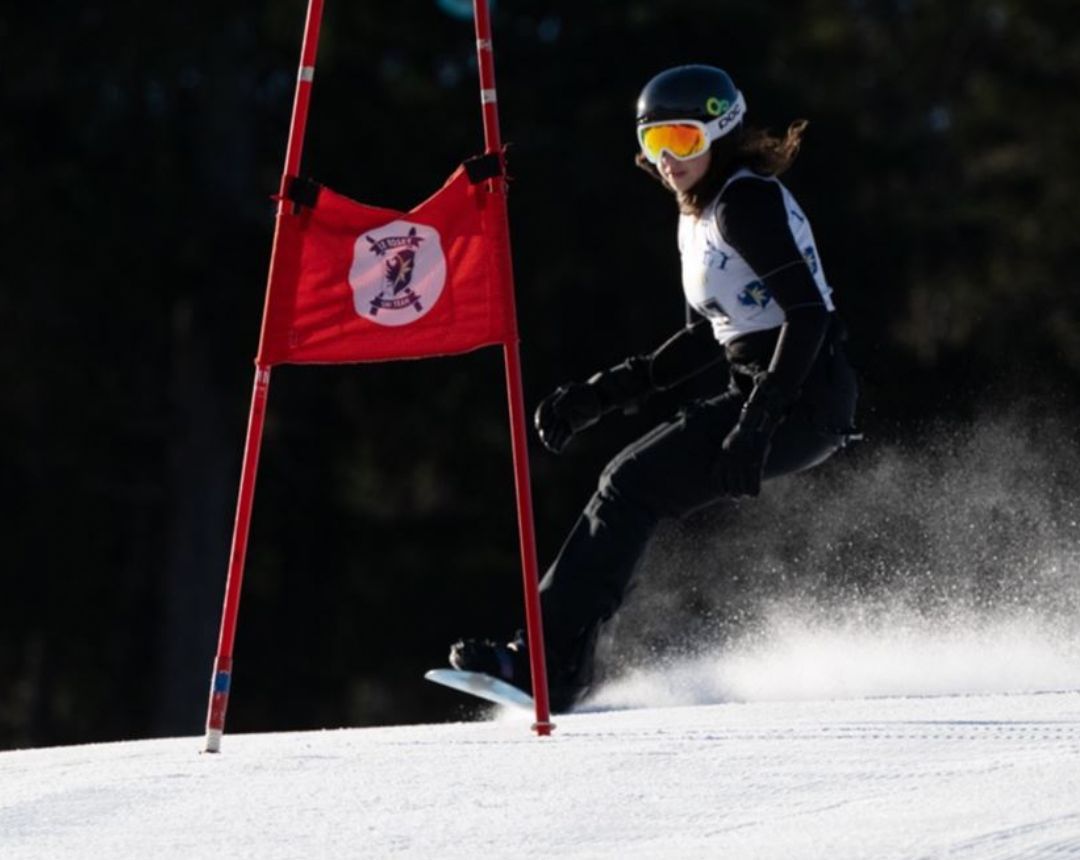
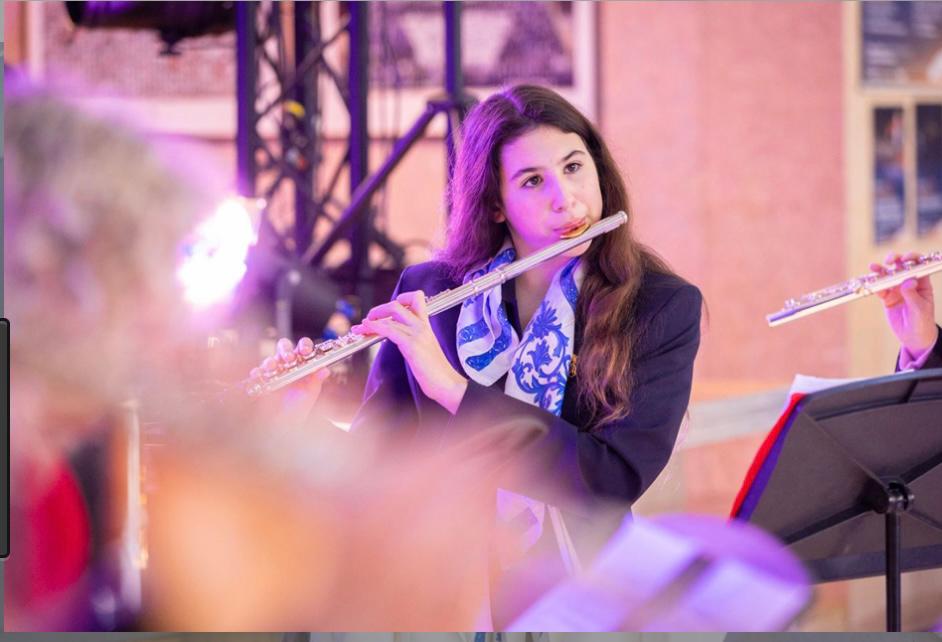
Originally from Türkiye, Buse has spent the past seven years living and studying in Switzerland. She plays the flute and harp, reads science fiction and dystopian literature, and has spent a decade snowboarding, eventually becoming captain of her school’s team.
“I think I’m pretty close to the definition of a generalist,” she said.
Her academic interests are equally wide-ranging, spanning quantum physics, neuroscience,engineering, literature, synthetic biology and education.
Among Buse’s proudest accomplishments is participating in the International Genetically Engineered Machine competition, known as iGEM. Although the competition is primarily designed for university students, Buse and a friend helped establish a team at their high school and develop a project focused on lung cancer.
They created a diagnostic toolkit designed to identify a specific genetic biomarker associated with the disease. After refining their methodology over two years, the team earned two silver medals. See 2025 here and 2024 here.
“The part of it that I enjoyed the most was just the Jamboree,” Buse said. “It was the experience of meeting all these people who are so passionately involved in the field.”
Buse also represented Switzerland in debate for two years, established a neuroscience society at her school (read coverage in the Harvard Brain) and contributed to research on large language models. Though these experiences cross disciplines, she sees a clear connection between them.
“I think my general theme of everything I’ve been doing is the pursuit of knowledge,” she said.
For much of high school, Buse planned to study mechanical engineering. However, over time, she began to question that path after exploring it through various projects, books and summer programs, eventually realizing that it was not the future she wanted. A math teacher who knew her well encouraged her to reconsider Minerva during a stressful period of university applications.
Buse had heard about Minerva several years earlier but initially set it aside because it did not offer engineering. With her plans changing, Minerva’s interdisciplinary curriculum and global model felt much more aligned with what she wanted.
“I could spend four years of my life studying something that I now realize is not actually my passion,” she said, “or go to this more alternative route where I get to study a way bigger array of things that I’m interested in, possibly change the way I’m thinking and have the added benefit of also traveling the world.”
As she settles into her first semester at Minerva, Buse is especially energized by learning alongside classmates from different backgrounds and is equally curious about Minerva’s first-year curriculum. She hopes to influence the future of education, and sees an opportunity to experience a different model firsthand and consider what makes it effective.
“I think going through a more alternative system would also give me a viewpoint,” she said. “Does this work? What things should be changed, and how can that be more effective?”
She has also appreciated the faculty members she has encountered, including Professor Carlos Rios, whom she highlighted as an early part of her positive experience. "He’s been including me in all of his research group sessions, and I’ve already had the opportunity to begin a project with him," Buse said.
When asked to consider who she hopes to become by graduation, she said “more knowledgeable, more experienced and more fulfilled.”
Buse expects to pursue a master’s degree and Ph.D. in the future, giving her opportunities to specialize later. For now, she wants the freedom to explore.
.png)
--
Interested in an undergraduate experience that allows you to explore ideas across disciplines, cultures and cities? Learn more about Minerva University’s global undergraduate program here.
Quick Facts
Computational Sciences
Computational Sciences
Natural Sciences
Computational Sciences
Arts & Humanities, Natural Sciences
Social Sciences & Arts and Humanities
Business
Computational Sciences
Computational Sciences
Social Sciences & Business
Computational Sciences
Social Sciences
Computational Sciences & Business
Business & Computational Sciences
Computational Sciences
Computational Sciences
Social Sciences & Business
Business
Natural Sciences
Social Sciences
Social Sciences
Social Sciences & Business
Business & Computational Sciences
Business and Social Sciences
Social Sciences and Business
Computational Sciences & Social Sciences
Computer Science & Arts and Humanities
Business and Computational Sciences
Business and Social Sciences
Natural Sciences
Arts and Humanities
Business, Social Sciences
Business & Arts and Humanities
Computational Sciences
Natural Sciences, Computer Science
Computational Sciences
Arts & Humanities
Computational Sciences, Social Sciences
Computational Sciences
Computational Sciences
Natural Sciences, Social Sciences
Social Sciences, Natural Sciences
Data Science, Statistics
Computational Sciences
Business
Computational Sciences, Data Science
Social Sciences
Natural Sciences
Business, Natural Sciences
Business, Social Sciences
Computational Sciences
Arts & Humanities, Social Sciences
Social Sciences
Computational Sciences, Natural Sciences
Natural Sciences
Computational Sciences, Social Sciences
Business, Social Sciences
Computational Sciences
Natural Sciences, Social Sciences
Social Sciences
Arts & Humanities, Social Sciences
Arts & Humanities, Social Science
Social Sciences, Business
Arts & Humanities
Computational Sciences, Social Science
Natural Sciences, Computer Science
Computational Science, Statistic Natural Sciences
Business & Social Sciences
Sustainability
Sustainability
Natural Sciences & Sustainability
Natural Sciences
Sustainability
Computational Sciences
Computational Sciences
Computational Science & Business
Data Science and Statistics
Data Science and Statistics, Digital Practices
Earth and Environmental Systems
Cognition, Brain, and Behavior & Philosophy, Ethics, and the Law
Computational Theory and Analysis
Computer Science and Artificial Intelligence
Brand Management & Computer Science and Artificial Intelligence
Computer Science and Artificial Intelligence
Economics and Society & Strategic Finance
Enterprise Management
Economics and Society
Cells and Organisms & Brain, Cognition, and Behavior
Cognitive Science and Economics & Political Science
Applied Problem Solving & Computer Science and Artificial Intelligence
Computer Science and Artificial Intelligence & Cognition, Brain, and Behavior
Designing Societies & New Ventures
Strategic Finance & Data Science and Statistics
Brand Management and Designing Societies
Data Science & Economics
Machine Learning
Cells, Organisms, Data Science, Statistics
Arts & Literature and Historical Forces
Artificial Intelligence & Computer Science
Cells and Organisms, Mind and Emotion
Economics, Physics
Managing Operational Complexity and Strategic Finance
Global Development Studies and Brain, Cognition, and Behavior
Scalable Growth, Designing Societies
Business
Drug Discovery Research, Designing and Implementing Policies
Historical Forces, Cognition, Brain, and Behavior
Artificial Intelligence, Psychology
Designing Solutions, Data Science and Statistics
Data Science and Statistic, Theoretical Foundations of Natural Science
Strategic Finance, Politics, Government, and Society
Conversation
For M30 student Buse Toksoz, choosing a direction has never meant limiting herself to one discipline or interest.
Originally from Türkiye, Buse has spent the past seven years living and studying in Switzerland. She plays the flute and harp, reads science fiction and dystopian literature, and has spent a decade snowboarding, eventually becoming captain of her school’s team.
“I think I’m pretty close to the definition of a generalist,” she said.
Her academic interests are equally wide-ranging, spanning quantum physics, neuroscience,engineering, literature, synthetic biology and education.
Among Buse’s proudest accomplishments is participating in the International Genetically Engineered Machine competition, known as iGEM. Although the competition is primarily designed for university students, Buse and a friend helped establish a team at their high school and develop a project focused on lung cancer.
They created a diagnostic toolkit designed to identify a specific genetic biomarker associated with the disease. After refining their methodology over two years, the team earned two silver medals. See 2025 here and 2024 here.
“The part of it that I enjoyed the most was just the Jamboree,” Buse said. “It was the experience of meeting all these people who are so passionately involved in the field.”
Buse also represented Switzerland in debate for two years, established a neuroscience society at her school (read coverage in the Harvard Brain) and contributed to research on large language models. Though these experiences cross disciplines, she sees a clear connection between them.
“I think my general theme of everything I’ve been doing is the pursuit of knowledge,” she said.
For much of high school, Buse planned to study mechanical engineering. However, over time, she began to question that path after exploring it through various projects, books and summer programs, eventually realizing that it was not the future she wanted. A math teacher who knew her well encouraged her to reconsider Minerva during a stressful period of university applications.
Buse had heard about Minerva several years earlier but initially set it aside because it did not offer engineering. With her plans changing, Minerva’s interdisciplinary curriculum and global model felt much more aligned with what she wanted.
“I could spend four years of my life studying something that I now realize is not actually my passion,” she said, “or go to this more alternative route where I get to study a way bigger array of things that I’m interested in, possibly change the way I’m thinking and have the added benefit of also traveling the world.”
As she settles into her first semester at Minerva, Buse is especially energized by learning alongside classmates from different backgrounds and is equally curious about Minerva’s first-year curriculum. She hopes to influence the future of education, and sees an opportunity to experience a different model firsthand and consider what makes it effective.
“I think going through a more alternative system would also give me a viewpoint,” she said. “Does this work? What things should be changed, and how can that be more effective?”
She has also appreciated the faculty members she has encountered, including Professor Carlos Rios, whom she highlighted as an early part of her positive experience. "He’s been including me in all of his research group sessions, and I’ve already had the opportunity to begin a project with him," Buse said.
When asked to consider who she hopes to become by graduation, she said “more knowledgeable, more experienced and more fulfilled.”
Buse expects to pursue a master’s degree and Ph.D. in the future, giving her opportunities to specialize later. For now, she wants the freedom to explore.
--
Interested in an undergraduate experience that allows you to explore ideas across disciplines, cultures and cities? Learn more about Minerva University’s global undergraduate program here.