.png)


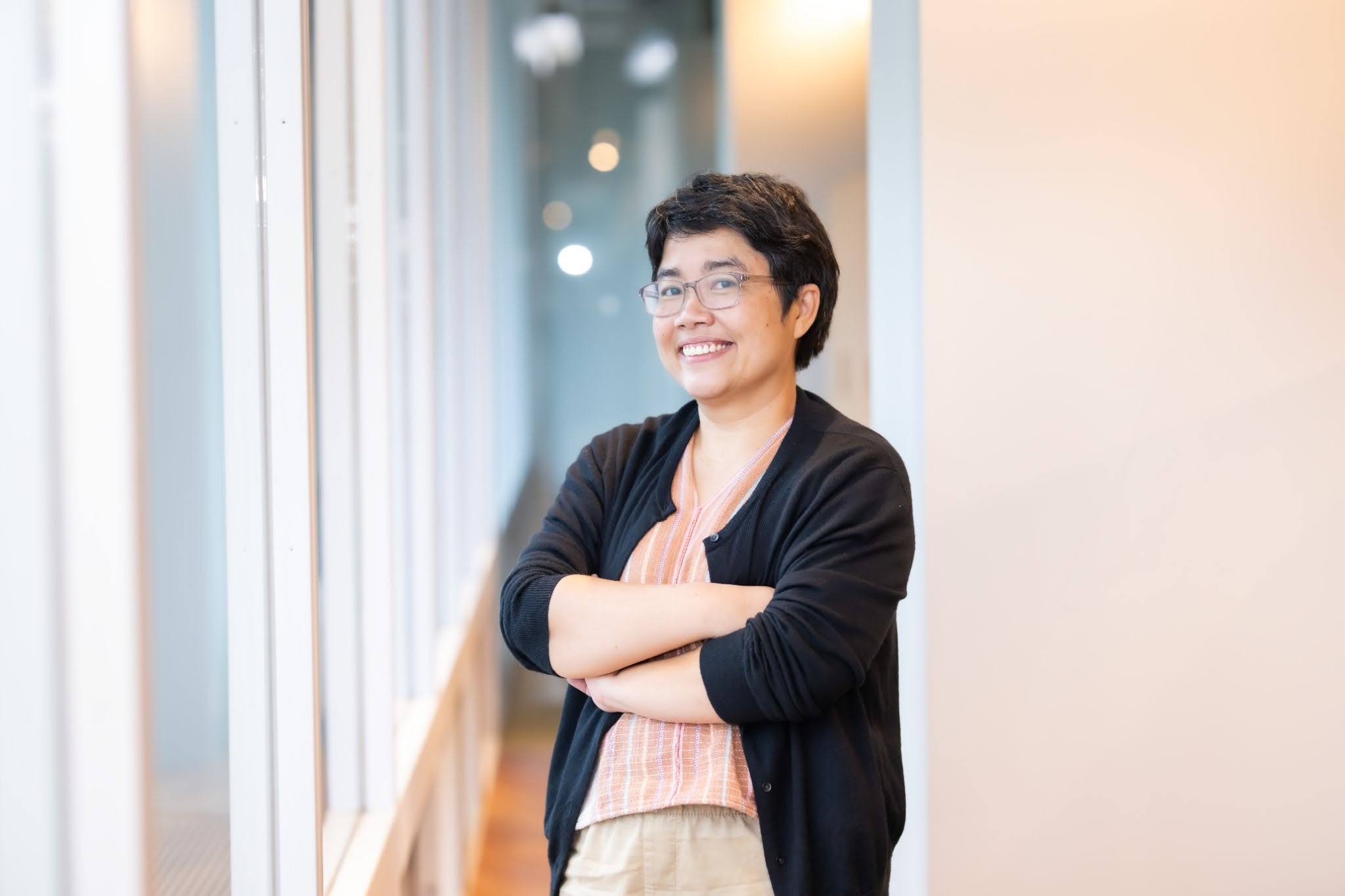
You have spent much of your career supporting refugee education, child protection, and migrant communities along Thailand's border regions. What inspired you to pursue this work, and what continues to motivate you today?
My journey began when I first witnessed the realities faced by displaced families in Thailand. It was a grounding experience that made me deeply aware of the vast disparities in opportunity between my own circles and those fleeing crisis. That moment changed my perspective entirely, sparking a lifelong commitment to use whatever skills I have to help close those gaps and ensure that every individual feels safe, seen, and valued.
Today, my motivation comes entirely from the profound resilience of the communities themselves. I am constantly humbled by the parents and children who pursue learning and hope despite facing immense hardships. For me, seeing a student from a border community grow up to become a teacher, advocate, or leader in their own right is the greatest possible reward.
The work along the border is complex and far from over. Ultimately, it remains a true privilege to stand alongside these families and support their journey toward a safer, more valued future.
Your role requires working with local partners, schools, camp authorities, donors, and community members. What have these experiences taught you about leading across different perspectives and priorities?
Navigating the diverse priorities of local partners, schools, camp authorities, donors, and community members has taught me that leading across different perspectives begins with listening. I have learned that sustainable collaboration cannot be forced; it requires the humility to deeply understand each stakeholder’s unique pressures, goals, and constraints.
By keeping our shared goals at the center of every conversation, it becomes possible to find common ground even amidst conflicting priorities. Ultimately, these experiences have shown me that leadership in this space is not about directing, but about serving as a bridge—ensuring that every voice is respected and that the community's own wisdom guides our collective efforts.
What motivated you to apply to the World Wise Executive Leadership Program, and what leadership challenges or opportunities are you hoping to explore through the experience?
I applied to the World Wise Executive Leadership Program out of a simple desire to better serve the communities I work with. Years of working along the border have shown me that the challenges displaced families face are deeply intertwined, and I still have so much to learn about how to address them effectively. I hope to use this experience to explore how we can move gently from just responding to daily crises toward nurturing long-term, stable opportunities for these families. Specifically, I look forward to learning how to better support the immediate, heartfelt needs of our local partners while responsibly balancing the expectations of our donors, ensuring our collective work can endure for years to come.
Much of your work focuses on ensuring that policies translate into meaningful support for children, families, and educators. Why do you believe cultural understanding and community-centered leadership are essential for creating lasting impact?
Policies on paper only matter if they make sense in the daily lives and classrooms of the families they serve. Without the humility to listen and understand a community's culture, even the best intentions can create barriers rather than real support.
The families living along the border are the true experts on their own lives. Lasting impact does not come from what we bring to a community, but from what we build with them. True change only happens when families know that their identity, language, and lived experiences are genuinely respected and woven into every step we take together.
As a Nippon Foundation Scholar and member of the inaugural World Wise cohort, what impact do you hope this experience will have on your leadership journey and the communities you serve?
Being named a Nippon Foundation Scholar and joining the World Wise cohort is an honor that fills me with deep gratitude. I see this opportunity not as a personal milestone, but as a responsibility to become a more thoughtful advocate for the communities I am privileged to serve.
Through this journey, I hope to learn from the diverse wisdom of my peers, challenge my own assumptions, and deepen my empathy.
Ultimately, my highest hope is that the benefits of this program flow directly back to the families along the border. I want to return with stronger insights to help amplify their voices, protect their children, and ensure that the incredible resilience of these communities is recognized and honored.
–
Ready to strengthen your leadership across cultures? Learn more about Minerva University’s World Wise Executive Leadership Program.
Quick Facts
Computational Sciences
Computational Sciences
Natural Sciences
Computational Sciences
Arts & Humanities, Natural Sciences
Social Sciences & Arts and Humanities
Business
Computational Sciences
Computational Sciences
Social Sciences & Business
Computational Sciences
Social Sciences
Computational Sciences & Business
Business & Computational Sciences
Computational Sciences
Computational Sciences
Social Sciences & Business
Business
Natural Sciences
Social Sciences
Social Sciences
Social Sciences & Business
Business & Computational Sciences
Business and Social Sciences
Social Sciences and Business
Computational Sciences & Social Sciences
Computer Science & Arts and Humanities
Business and Computational Sciences
Business and Social Sciences
Natural Sciences
Arts and Humanities
Business, Social Sciences
Business & Arts and Humanities
Computational Sciences
Natural Sciences, Computer Science
Computational Sciences
Arts & Humanities
Computational Sciences, Social Sciences
Computational Sciences
Computational Sciences
Natural Sciences, Social Sciences
Social Sciences, Natural Sciences
Data Science, Statistics
Computational Sciences
Business
Computational Sciences, Data Science
Social Sciences
Natural Sciences
Business, Natural Sciences
Business, Social Sciences
Computational Sciences
Arts & Humanities, Social Sciences
Social Sciences
Computational Sciences, Natural Sciences
Natural Sciences
Computational Sciences, Social Sciences
Business, Social Sciences
Computational Sciences
Natural Sciences, Social Sciences
Social Sciences
Arts & Humanities, Social Sciences
Arts & Humanities, Social Science
Social Sciences, Business
Arts & Humanities
Computational Sciences, Social Science
Natural Sciences, Computer Science
Computational Science, Statistic Natural Sciences
Business & Social Sciences
Sustainability
Sustainability
Natural Sciences & Sustainability
Natural Sciences
Sustainability
Computational Sciences
Computational Sciences
Computational Science & Business
Data Science and Statistics
Data Science and Statistics, Digital Practices
Earth and Environmental Systems
Cognition, Brain, and Behavior & Philosophy, Ethics, and the Law
Computational Theory and Analysis
Computer Science and Artificial Intelligence
Brand Management & Computer Science and Artificial Intelligence
Computer Science and Artificial Intelligence
Economics and Society & Strategic Finance
Enterprise Management
Economics and Society
Cells and Organisms & Brain, Cognition, and Behavior
Cognitive Science and Economics & Political Science
Applied Problem Solving & Computer Science and Artificial Intelligence
Computer Science and Artificial Intelligence & Cognition, Brain, and Behavior
Designing Societies & New Ventures
Strategic Finance & Data Science and Statistics
Brand Management and Designing Societies
Data Science & Economics
Machine Learning
Cells, Organisms, Data Science, Statistics
Arts & Literature and Historical Forces
Artificial Intelligence & Computer Science
Cells and Organisms, Mind and Emotion
Economics, Physics
Managing Operational Complexity and Strategic Finance
Global Development Studies and Brain, Cognition, and Behavior
Scalable Growth, Designing Societies
Business
Drug Discovery Research, Designing and Implementing Policies
Historical Forces, Cognition, Brain, and Behavior
Artificial Intelligence, Psychology
Designing Solutions, Data Science and Statistics
Data Science and Statistic, Theoretical Foundations of Natural Science
Strategic Finance, Politics, Government, and Society
Conversation
You have spent much of your career supporting refugee education, child protection, and migrant communities along Thailand's border regions. What inspired you to pursue this work, and what continues to motivate you today?
My journey began when I first witnessed the realities faced by displaced families in Thailand. It was a grounding experience that made me deeply aware of the vast disparities in opportunity between my own circles and those fleeing crisis. That moment changed my perspective entirely, sparking a lifelong commitment to use whatever skills I have to help close those gaps and ensure that every individual feels safe, seen, and valued.
Today, my motivation comes entirely from the profound resilience of the communities themselves. I am constantly humbled by the parents and children who pursue learning and hope despite facing immense hardships. For me, seeing a student from a border community grow up to become a teacher, advocate, or leader in their own right is the greatest possible reward.
The work along the border is complex and far from over. Ultimately, it remains a true privilege to stand alongside these families and support their journey toward a safer, more valued future.
Your role requires working with local partners, schools, camp authorities, donors, and community members. What have these experiences taught you about leading across different perspectives and priorities?
Navigating the diverse priorities of local partners, schools, camp authorities, donors, and community members has taught me that leading across different perspectives begins with listening. I have learned that sustainable collaboration cannot be forced; it requires the humility to deeply understand each stakeholder’s unique pressures, goals, and constraints.
By keeping our shared goals at the center of every conversation, it becomes possible to find common ground even amidst conflicting priorities. Ultimately, these experiences have shown me that leadership in this space is not about directing, but about serving as a bridge—ensuring that every voice is respected and that the community's own wisdom guides our collective efforts.
What motivated you to apply to the World Wise Executive Leadership Program, and what leadership challenges or opportunities are you hoping to explore through the experience?
I applied to the World Wise Executive Leadership Program out of a simple desire to better serve the communities I work with. Years of working along the border have shown me that the challenges displaced families face are deeply intertwined, and I still have so much to learn about how to address them effectively. I hope to use this experience to explore how we can move gently from just responding to daily crises toward nurturing long-term, stable opportunities for these families. Specifically, I look forward to learning how to better support the immediate, heartfelt needs of our local partners while responsibly balancing the expectations of our donors, ensuring our collective work can endure for years to come.
Much of your work focuses on ensuring that policies translate into meaningful support for children, families, and educators. Why do you believe cultural understanding and community-centered leadership are essential for creating lasting impact?
Policies on paper only matter if they make sense in the daily lives and classrooms of the families they serve. Without the humility to listen and understand a community's culture, even the best intentions can create barriers rather than real support.
The families living along the border are the true experts on their own lives. Lasting impact does not come from what we bring to a community, but from what we build with them. True change only happens when families know that their identity, language, and lived experiences are genuinely respected and woven into every step we take together.
As a Nippon Foundation Scholar and member of the inaugural World Wise cohort, what impact do you hope this experience will have on your leadership journey and the communities you serve?
Being named a Nippon Foundation Scholar and joining the World Wise cohort is an honor that fills me with deep gratitude. I see this opportunity not as a personal milestone, but as a responsibility to become a more thoughtful advocate for the communities I am privileged to serve.
Through this journey, I hope to learn from the diverse wisdom of my peers, challenge my own assumptions, and deepen my empathy.
Ultimately, my highest hope is that the benefits of this program flow directly back to the families along the border. I want to return with stronger insights to help amplify their voices, protect their children, and ensure that the incredible resilience of these communities is recognized and honored.
–
Ready to strengthen your leadership across cultures? Learn more about Minerva University’s World Wise Executive Leadership Program.